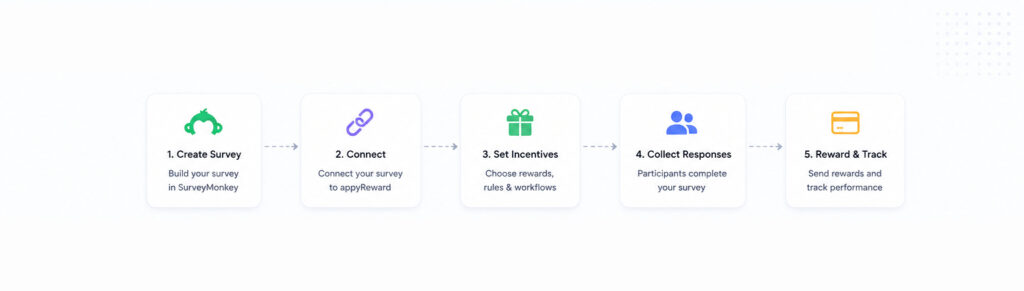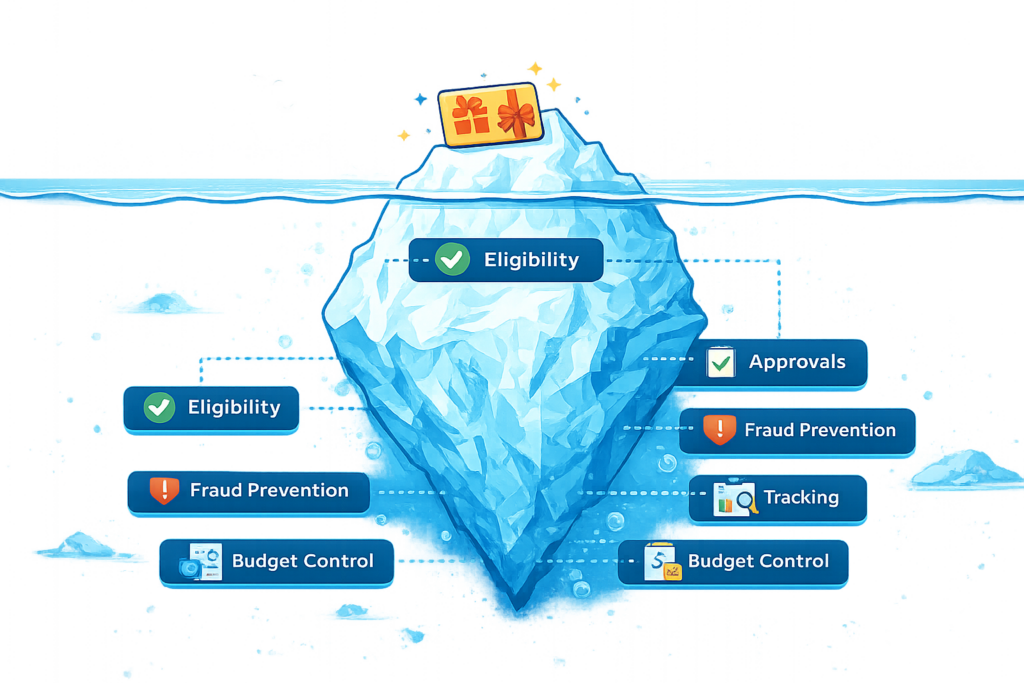
Offering incentives is one of the most effective ways to increase survey participation rates. Numerous studies have shown that rewards can improve response rates, encourage engagement, and help researchers reach hard-to-recruit populations.
However, incentives can also create an unintended side effect: fraud.
As digital gift cards, prepaid cards, and electronic rewards become increasingly common, survey owners face a growing challenge. How can you reward legitimate participants while preventing abuse, duplicate claims, and fraudulent responses?
Why Incentives Attract Fraud
Most participants complete surveys honestly. Unfortunately, a small number of individuals actively seek out opportunities to collect rewards without legitimately participating in the study.
When a survey offers compensation, several types of abuse can occur:
- Ineligible individuals attempting to participate
- Multiple submissions from the same person
- Creation of multiple email addresses or identities
- Automated bot submissions
- Shared survey links spreading beyond the intended audience
In some cases, a survey intended for a few hundred participants can suddenly generate thousands of responses, creating significant financial liability and data quality concerns.
The Hidden Cost of Fraudulent Responses
The most obvious cost is the incentive budget itself.
Every fraudulent reward delivered is money that cannot be used for legitimate participants.
But the financial impact is often only part of the problem.
Fraudulent responses can:
- Distort research findings
- Reduce data quality
- Increase cleaning and validation efforts
- Delay study timelines
- Undermine confidence in results
For researchers, the integrity of the data is often far more valuable than the incentive budget.
Why CAPTCHA Alone Is Not Enough
Many survey platforms offer CAPTCHA protection, and CAPTCHA remains an important first line of defense against automated bots.
However, modern fraud often involves a combination of automated tools and real individuals who are motivated by financial rewards.
A CAPTCHA may stop some automated attacks, but it does not prevent:
- Multiple reward claims
- Duplicate participants
- Shared survey links
- Disposable email addresses
- Fraudulent identities
Effective protection requires multiple layers of security rather than a single barrier.
Building a Multi-Layer Protection Strategy
Organizations running incentive-based surveys should consider implementing several safeguards:
Verify Participant Identity
Verification methods such as email confirmation or one-time passcodes can help ensure that participants are real individuals.
Monitor Duplicate Activity
Reviewing IP addresses, submission patterns, and claim behavior can help identify suspicious activity.
Control Reward Delivery
Rather than automatically sending rewards immediately after survey completion, many organizations benefit from introducing verification checkpoints before delivery.
Limit Reward Eligibility
Restricting rewards to approved participants or verified respondents can significantly reduce abuse.
Monitor Response Patterns
Unusual spikes in responses, clusters of submissions, or activity occurring at unexpected hours can be indicators of fraud.
Anonymous Surveys Present Additional Challenges
Anonymous surveys are often necessary when collecting sensitive information.
However, anonymity can make participant verification more difficult.
A common approach is to separate survey responses from reward collection.
Participants complete the survey anonymously and then claim their reward through a separate process. This allows researchers to preserve respondent confidentiality while still maintaining control over incentive distribution.
Security Should Be Part of Incentive Delivery
Many organizations focus heavily on securing the survey itself but overlook the reward delivery process.
In reality, reward distribution is often where fraud attempts occur.
Security measures such as:
- Access controls
- One-time passcode verification
- IP monitoring
- Country restrictions
- Eligibility checks
- Manual approval workflows
can provide an additional layer of protection before incentives are delivered.
The Missing Layer: Secure Reward Delivery
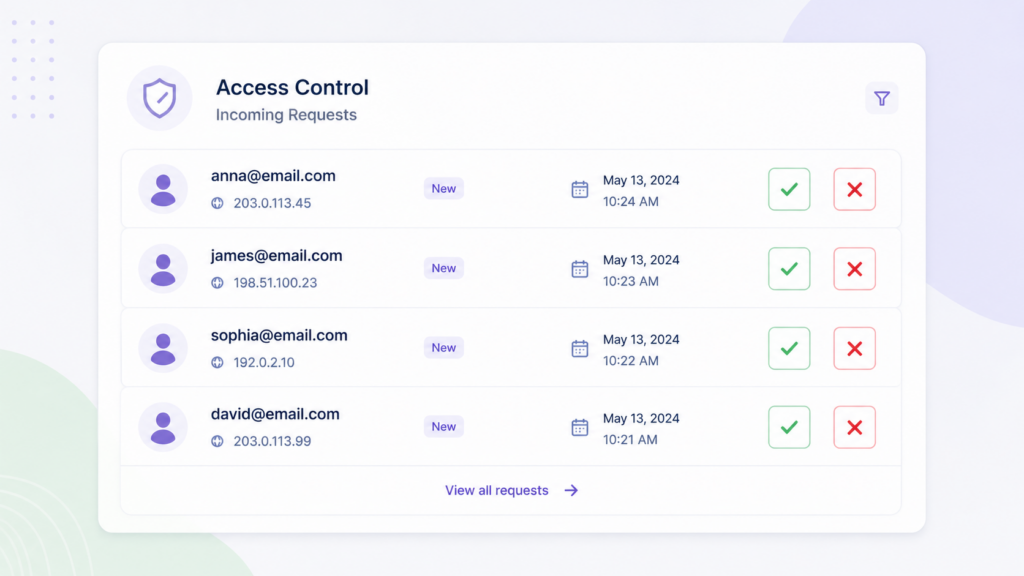
Most survey platforms focus on collecting responses. Very few focus on what happens after the survey is completed.
Yet reward delivery is often where abuse occurs.
A participant may submit multiple responses, share a reward link with others, or attempt to claim the same incentive multiple times. In large studies, even a small amount of abuse can quickly impact both incentive budgets and data quality.
This is where AppyReward comes in.
AppyReward was designed to help organizations automate participant incentives while maintaining control over who receives rewards and how they are delivered.
Researchers can distribute Amazon Gift Cards, Visa Prepaid Cards, Reward Link, and hundreds of other digital rewards while applying multiple security layers before delivery.
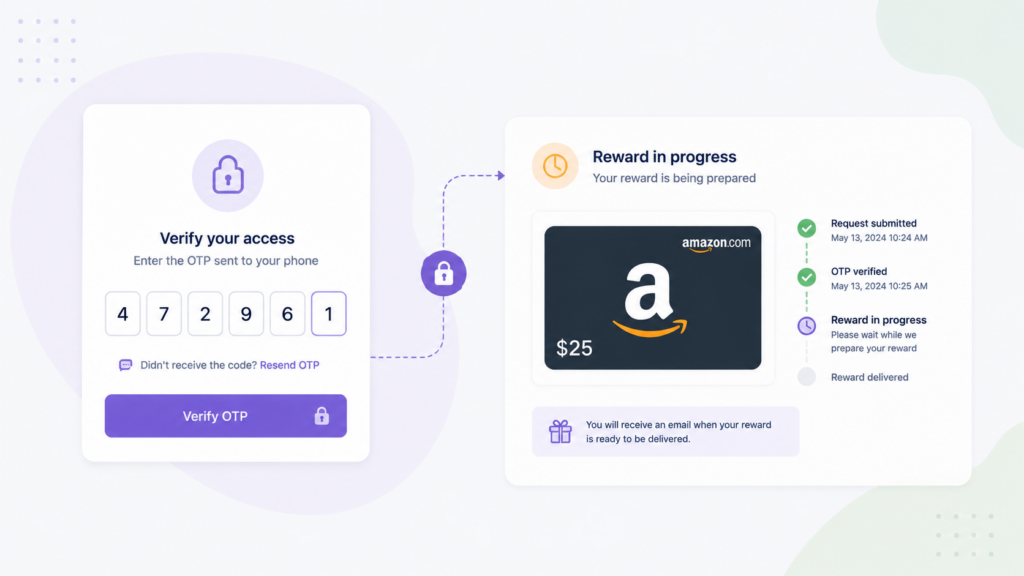
Available controls include:
- Access Control workflows
- Email and SMS OTP verification
- IP-based restrictions
- Country restrictions
- Duplicate claim prevention
- Eligibility verification
- Claim approval workflows
- Reward delivery tracking
Rather than simply sending a gift card immediately after survey completion, AppyReward allows organizations to build a secure reward process that protects both participants and incentive budgets.
For anonymous surveys, AppyReward can also separate reward collection from survey responses, helping organizations preserve respondent confidentiality while still rewarding participants.
The result is a better balance between participant engagement, survey integrity, and fraud prevention.