Every researcher has faced the same frustrating cycle: a survey goes out, response rates trickle in at single digits, and the handful of completed responses are riddled with skipped questions and one-word answers. The instinct is often to blame the survey itself — too long, too boring, poorly worded. But a growing body of evidence points to a simpler, more fixable culprit: participants aren’t being adequately compensated for their time and attention. Rewarding survey participation isn’t just a nice gesture — it’s a data-quality strategy.
Digital Incentives Bring More Qualified People to the Table
The most immediate effect of an incentive is scale. When researchers offer a reward, response rates climb — sometimes dramatically. Even modest incentives can produce outsized effects: one study found that a token reward like a coffee coupon can increase response rates by over 300%. Rewards have also been shown to draw in a meaningful share of people who would otherwise never respond at all, helping researchers reach audiences that are normally hard to engage.
A larger pool of respondents matters because it directly improves the statistical power of a study. It’s harder to draw confident conclusions from 40 completed surveys than from 400. Digital incentives close that gap. The instant reward makes this a compelling proposition for participants and could be a good way to get a lot of respondents in a short space of time.
Bigger Samples Mean More Representative Samples
Response volume is only half the story — the composition of who responds matters just as much. Without an incentive, surveys tend to attract a narrow slice of people: those with unusually strong opinions, extra free time, or a personal stake in the topic. That skews results.
Reward structures counteract this by pulling in busier, more “average” respondents who wouldn’t otherwise bother. A more diverse and representative pool of participants produces data that better reflects the actual target population, rather than just its most vocal members.
Compensation Signals Respect — and Respect Improves Effort
There’s a behavioral dimension here too. Survey research increasingly points to a simple psychological mechanism: when people feel their time is valued, they tend to reciprocate with more thoughtful engagement. This is sometimes explained through social exchange theory — pairing an invitation with a reward builds trust and triggers a sense of obligation to respond in kind, not just to open the survey, but to complete it conscientiously.
Industry surveys back this up directly. Research presented at the Insights Association Annual Conference found that when people stopped participating in research panels, only 4% said they simply disliked surveys — but nearly half cited inadequate compensation as the reason they walked away. That’s a strong signal that the “quality” problem in research isn’t really about apathetic people; it’s about undervalued ones.
The Caveat: Incentives Must Be Designed Carefully
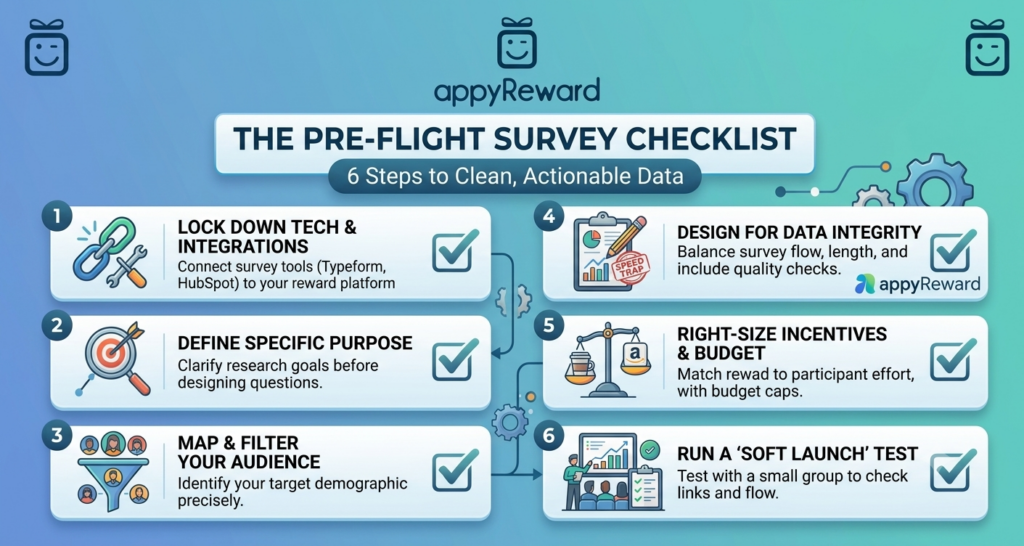
None of this means “more money, no questions asked” is the right strategy. Poorly structured incentives can backfire — attracting professional survey-takers who are chasing the reward rather than engaging with the questions, or drawing in respondents outside the intended target audience who rush through just to qualify for payment. The research is consistent on this point: incentives improve quality only when they’re matched to the right audience, sized appropriately for the effort required, and structured to reward genuine engagement rather than mere completion.
Done well — targeting the right respondents, calibrating the reward to the task, and treating compensation as a baseline of respect rather than a bribe — incentives don’t just fill out a spreadsheet faster. They produce samples that are larger, more representative, and more thoughtfully completed than what unpaid surveys typically yield.
The Bottom Line
The evidence increasingly favors reward-based recruitment as a quality strategy, not just a volume strategy. Larger samples, more representative populations, and more engaged respondents all trace back to one underlying idea: people give better answers when their time is treated as valuable. For researchers still relying on goodwill alone to gather data, the numbers suggest it may be time to reconsider.
Do you want to learn more about survey rewards? Please feel free to ask us for any suggestions before launching your campaign. [Click here.]
Gerard Fournier
CEO, appyRewards, Inc.